OTTONELLO

PARTIRE È COME UN PO'...

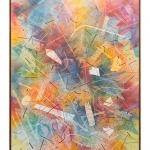
Calasetta (2018); Fondazione MACC Permanent Collection (ph courtesy Fondazione MACC)

La Fondazione MACC ha il piacere di presentare PARTIRE È COME UN PO’…, retrospettiva dell’artista Antonello Ottonello, un viaggio nella materia e nella memoria collettiva del Sulcis e la sua anima profonda. A cura di Claude Corongiu e presentata da Efisio Carbone la mostra aprirà al pubblico domenica 16 novembre fino al 15 marzo 2026 negli spazi del Museo d’Arte Contemporanea di Calasetta.


PARTIRE È COME UN PO’…

Antonello Ottonello al MACC di Calasetta


Ci sono artisti che abitano la propria terra come si abita un destino. Antonello Ottonello (Cagliari, 1948-2021) è uno di questi. La Sardegna, e in particolare il Sulcis, non è per lui semplice origine o paesaggio, ma matrice generativa, luogo di pensiero, ferita e nutrimento. Da Calasetta — paese materno, nido affettivo e mitico — si irradia la sua geografia sentimentale: un arcipelago di memorie e di immagini che comprendono Carbonia, Portoscuso, Portovesme, le miniere di Monteponi e di Ingurtosu, i campi abbandonati, le scogliere che sprofondano in un mare denso di malinconia. È una Sardegna mineraria e poetica, arsa e splendente, sospesa tra sfruttamento e bellezza. 

La mostra Partire è come un po’…, allestita al Museo MACC di Calasetta, restituisce la sostanza profonda di questo rapporto. È un viaggio nella materia e nella memoria, ma anche nel sentimento della distanza, nella saudade che abita ogni partenza. 

Ottonello ha conosciuto la fuga e il ritorno, la vitalità cosmopolita della Roma teatrale e la contemplazione austera dell’isola. Ne ha tratto un linguaggio ibrido e stratificato, dove il gesto del pittore si fonde con la memoria dello scenografo e l’attenzione per la scena diviene architettura della visione.


Color Pietra: il cuore minerario

Tra i nuclei più intensi della mostra si colloca la serie Color Pietra, dedicata al mondo minerario del Sulcis.

In queste opere, Ottonello non rappresenta la miniera: la rifonda. Raccoglie le pietre, le sabbie, le polveri — residui concreti del territorio — e le impasta con pigmenti naturali fino a costruire superfici che sono al tempo stesso pittura e reliquia, icona e geologia. 

L’artista plasma la materia con un gesto quasi liturgico: i frammenti di pietra provenienti dalle viscere di quella terra diventano pigmento e memoria, struttura e racconto. Ogni quadro è un corpo vivo, una stratificazione di memorie in cui si depositano le fatiche del lavoro umano e la lenta, inesorabile metamorfosi del paesaggio.

I tondi Color Pietra non sono solo composizioni materiche: sono confessioni della terra, “documenti” in senso benjaminiano, ma anche preghiere laiche rivolte alla dignità perduta di un mondo operaio.
Le superfici, spesso aspre e fratturate, evocano tanto la forza tellurica della natura quanto la violenza dello sfruttamento. È una materia che si fa canto e ferita insieme.


Valigie: l’assenza, l’esilio, la nostalgia

Con le Valigie, Ottonello affronta uno dei temi più persistenti della storia sarda contemporanea: l’emigrazione.

Questi oggetti, apparentemente semplici, diventano nelle sue mani totem dell’assenza, reliquie di partenze collettive e solitudini private.

Ogni valigia è un frammento biografico, una piccola arca della memoria, un contenitore di desideri, paure, ricordi.

In esse si riflette la Sardegna spopolata e dolente, la generazione che abbandona i villaggi del Sulcis dopo la chiusura delle miniere, la disoccupazione, la dissoluzione di un tessuto sociale fondato sul lavoro.

Ottonello trasforma questo dramma in una liturgia visiva fatta di pudore e malinconia. Le Valigie non denunciano, ma custodiscono; non gridano, ma meditano.

Nel loro silenzio risuona la frase sospesa che dà titolo alla mostra - Partire è come un po’… - e che volutamente resta incompiuta, perché ogni partenza resta aperta: ferita e promessa insieme.


Poesie visive e cavallini: la leggerezza del mito

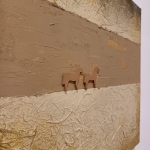
Accanto alle opere minerarie e alle installazioni dedicate al viaggio, le poesie visive con i cavallini di terracotta rappresentano la parte più intima e lirica della produzione di Ottonello.

Composte di parole, segni e frammenti, sono spazi di libertà in cui l’immagine si fa linguaggio, la scrittura diventa gesto, e l’ironia si mescola alla tenerezza.

I cavallini riportano l’artista al mondo dell’infanzia e del mito arcaico. Figure totemiche e leggere, realizzate con semplicità quasi rituale, questi piccoli animali di terracotta sembrano evocare il desiderio di movimento, la libertà interiore, ma anche la fragilità di ogni creatura.

Ottonello li plasma con la stessa sensibilità con cui dipinge: con leggerezza, con ironia, con compassione. Sono presenze silenziose, ma colme di vita.


Il mare e le tarlatane: la soglia del visibile

Nell’ultimo ciclo di lavori dedicato al mare, Ottonello ritorna al materiale che ha segnato l’inizio del suo percorso artistico: la tarlatana, il tessuto leggero usato in teatro per creare illusioni di profondità e trasparenza.

In pittura, la tarlatana diventa filtro poetico: diaframma tra il mondo reale e quello immaginato, soglia attraverso cui la luce si infrange e si dissolve.

Sospese tra pittura e tessitura, le opere marine sono paesaggi mentali più che descrittivi: l’artista vi deposita la propria idea di sogno e di distanza.

Il mare, in Ottonello, non è mai soltanto un tema iconografico; è piuttosto una metafora della memoria e dell’oltre, del desiderio e del ritorno. 

Attraverso la tarlatana, egli sembra voler trattenere l’impercettibile, catturare il respiro dell’acqua, dare forma all’evanescenza.


Un’estetica della ferita e della rinascita

L’opera di Antonello Ottonello si colloca al crocevia fra linguaggio e materia, tra teatro e pittura, tra gesto e contemplazione.

È un’arte che nasce dal contatto diretto con la terra, ma che non rinuncia alla dimensione visionaria.

Il suo sguardo, come quello dei grandi interpreti del Novecento isolano - da Ciusa Romagna a Casula, da Sassu a Delitala - sa coniugare denuncia e poesia, introspezione e universalità.

Ottonello non rappresenta la Sardegna: la reinventa, ne ascolta il respiro, ne decifra le crepe.
In ogni opera si avverte una tensione tra la durezza della materia e la leggerezza del pensiero, tra la ferita e la cura.

Il suo è un linguaggio che sa essere civile e spirituale, ancorato alla realtà e insieme proiettato verso una dimensione poetica più ampia.

Partire è come un po’… non è solo una mostra: è un commiato e un ritorno, un dialogo con la memoria collettiva del Sulcis e con la sua anima profonda.

Nel MACC di Calasetta, paese amato e custodito nel cuore dell’artista, le opere ritrovano il loro respiro originario: quello di una terra antica, ferita e luminosa, capace ancora di generare bellezza dalle sue stesse cicatrici.


Efisio Carbone


La mostra è resa possibile grazie al contributo di Fondazione Sardegna.


crediti immagine allegata:


Antonello Ottonello

Calasetta (2018)

tecnica mista su tela

80x80cm

Collezione Permanente Fondazione MACC

(courtesy Fondazione MACC)

exhibition view
exhibition view

Fondazione MACC is delighted to present PARTIRE È COME UN PO’ (DEPARTING IS A BIT LIKE…), a retrospective presentation dedicated to the artist Antonello Ottonello - a journey through material, memory, and the deep soul of the Sulcis region. Curated by Claude Corongiu and presented by Efisio Carbone, the exhibition will open to the public on Sunday, 16th November and will run until 15th March 2026 at the Museo MACC.


There are artists who inhabit their homeland as if it were their destiny. Antonello Ottonello (Cagliari, 1948–2021) was one of them. For him, Sardinia - and the Sulcis region in particular - was not simply a place of origin or a backdrop, but a generative source: a place of thought, of wounds, and of nourishment. His emotional geography radiates out from Calasetta - his mother’s village, a cradle of affection and myth - forming an archipelago of memories and images that stretches across Carbonia, Portoscuso, Portovesme, the Monteponi and Ingurtosu mines, the abandoned fields, and the cliffs that plunge into a sea full of melancholy. It is a Sardinia that is both industrial and poetic, scorched and luminous, suspended between exploitation and beauty.


The exhibition Departing Is a Bit Like…, presented at the Museo MACC in Calasetta, conveys the deep substance of this relationship. It becomes a journey through material and memory, but also through the feeling of distance - through the saudade that surrounds every departure. Ottonello knew both the escape and the return, the cosmopolitan energy of Rome’s theatre world and the austere contemplation of the island. From this he forged a hybrid, layered language in which the painter’s gesture merges with the scenographer’s sensibility, and attention to the stage becomes an architecture of vision.


Color Pietra: the mining world

Among the most compelling sections of the exhibition is the Color Pietra (Stone Colour) series, dedicated to the mining world of the Sulcis region. 

In these works, Ottonello does not depict the mine: he re-creates it. He gathers stones, sands and dusts - the physical remnants of the land - and mixes them with natural pigments to build surfaces that are at once painting and relic, icon and geology.

The artist shapes the material with an almost liturgical gesture: fragments of stone taken from the depths of that land become pigment and memory, structure and story. Each canvas is a living body, a layering of memories in which the hardships of human labour and the slow, inexorable transformation of the landscape are both preserved.

The Color Pietra roundels are not simply material compositions; they are confessions of the earth, “documents” in a Benjamin sense, but also secular prayers addressed to the lost dignity of a working world.

Their surfaces, often rough and fractured, evoke both the telluric force of nature and the violence of exploitation. It is matter that becomes, at the same time, song and wound.


Valigie: absence, exile, nostalgia

With the Valigie (Suitcases), Ottonello addresses one of the most enduring themes in modern Sardinian history: emigration.

These seemingly simple objects become, in his hands, totems of absence - relics of collective departures and private solitudes. 

Each suitcase is a biographical fragment, a small ark of memory, a container of desires, fears and recollections. 

In them is reflected a depopulated, sorrowful Sardinia: the generation that left the villages of the Sulcis region after the mines closed, amid unemployment and the collapse of a social fabric built on labour.

Ottonello transforms this drama into a visual liturgy shaped by restraint and melancholy. The Suitcases do not denounce; they safeguard. They do not cry out; they contemplate. 

In their silence echoes the suspended phrase that gives the exhibition its title - Departing Is a Bit Like… - left deliberately unfinished, because every departure remains open: a wound and a promise at the same time.


Visual poems and horses: the sublety of myth

Alongside the mining works and the installations involving the journey, the visual poems featuring terracotta horses represent the most intimate and lyrical part of Ottonello’s practice.

Composed of words, signs and fragments, they are spaces of freedom in which the image becomes language, writing becomes gesture, and irony mingles with tenderness.

The little horses lead the artist back to the world of childhood and archaic myth. Totemic yet light, crafted with an almost ritual simplicity, these small terracotta creatures seem to evoke a desire for movement, an inner freedom, but also the fragility inherent in every living being.

Ottonello shapes them with the same sensibility with which he paints: with lightness, with irony, with compassion. They are silent presences, yet full of life.


Sea and tarlatans: the threshold of the visible

In his latest series of works devoted to the sea, Ottonello returns to the material that marked the beginning of his artistic journey: tarlatan, a lightweight fabric traditionally used in theatre to create illusions of depth and transparency.

In painting, tarlatan becomes a poetic filter: a diaphragm between the real world and the imagined, a threshold through which light breaks and dissolves.

Suspended between painting and weaving, these marine works are mental landscapes rather than literal depictions: the artist deposits in them his own sense of dream and distance.

For Ottonello, the sea is never merely an iconographic subject; it is a metaphor for memory and the beyond, for desire and return. Through tarlatan, he seems to attempt to hold onto the imperceptible, capture the breath of water, and give form to the ephemeral.


An Aesthetic of Wound and Renewal

Antonello Ottonello’s work sits at the crossroads of language and material, between theatre and painting, between gesture and contemplation.

It is an art born from direct contact with the earth, yet it does not forsake the visionary dimension. His gaze, like that of the great interpreters of twentieth-century Sardinia - from Ciusa Romagna to Casula, from Sassu to Delitala - combines critique with poetry, introspection with universality.

Ottonello does not depict Sardinia: he reinvents it, listens to its breath, deciphers its cracks. In every work, one senses a tension between the hardness of matter and the lightness of thought, between wound and healing.

His language is at once civic and spiritual, grounded in reality yet reaching towards a broader poetic dimension.

Departing Is a Bit Like… is not merely an exhibition: it is a farewell and a return, a dialogue with the collective memory of the Sulcis region and with its deep soul.

At the Museo MACC in Calasetta - a town cherished and held in the artist’s heart - the works rediscover their original breath: that of an ancient land, wounded yet radiant, still capable of generating beauty from its own scars.


Efisio Carbone


BIO

Antonello Ottonello was born in Cagliari on 13 June 1948. After attending the Liceo Artistico in Cagliari, he graduated in 1974 from the Accademia di Belle Arti in Rome. His early professional experiences took place in the theatre, where he worked as a set designer, costume designer and actor with Mario Ricci’s company. During these same years, he began his artistic career, which was strongly influenced by his theatrical background. The main elements of his early works were the very tarlatans used in his stage sets, sometimes of gigantic proportions, echoing theatre curtains and imbued with vivid colours.

He returned to Sardinia in the early 1980s. In 1989, the Galleria Comunale d’Arte in Cagliari dedicated a solo exhibition of his Tarlatane on the occasion of its reopening following renovation works. That same year, he took part in the group graphic exhibition La mémoire et les images at the Hôtel de Ville in Strasbourg.

In 1992, Ottonello participated in the Seville Expo as part of Cerdeña Isla de Colores, presenting a work inspired by the mining world, which would later form the basis of his 1993 solo exhibition Ingurtosu. From this world, he drew both materials — coal, minerals, stones — and inspirations — the buildings of industrial archaeology — which translated into works of remarkable expressive power.

In recent years, his exploration of materials, combined with an ecological awareness, has led him to use — and literally seek out — elements from the land he inhabits: natural colours, plants, as well as sand, dusts and mining waste. The pigments he employs are entirely natural, and his works reflect a concern for rapid climate change and the gradual, relentless advance of desertification. From the fissures of the earth emerge cactus plants, their spines piercing the jute in cushions on which no one could sleep, or gathering fragments of torn canvases.

In 2004, Ottonello was the subject of a solo exhibition at the Teatro Lirico in Cagliari. This was followed by further solo and group exhibitions in Sardinia and abroad: in 2005 in London at the Fondazione Bartoli Felter, at Spazio (In)Visibile, at the Comune di Cagliari, the Comune di Carbonia, and the Comune di Iglesias; in 2015 and 2017 at Galleria Macca; in 2018 at the Mediateca del Mediterraneo in Cagliari on the occasion of his seventieth birthday; and from 2019 to 2022 at the Museo MACC, MURATS in Samugheo, in London, Rome, Puglia, Milan, and once again in Cagliari.

His works are included in important public and private collections, both national and international, including the Autonomous Region of Sardinia, Fondazione di Sardegna, Musei Civici di Cagliari, Comune di Carbonia, Fondazione MACC, Al Otaibi Foundation (Bahrain / London), and Diane Love (Houston, USA).