OMAR RODRIGUEZ-GRAHAM
THE WAY WE ARE | OCT 10 - NOV 26 | 2026
Galleria Macca è lieta di presentare The way we are (Come siamo), terza mostra personale di Omar Rodríguez-Graham, a cura di Efisio Carbone. La mostra sarà visibile esclusivamente online (sul nostro sito web, e sui nostri social) fino al 26 novembre 2026. In occasione della 22a Giornata del Contemporaneo, e durante il corso della mostra, verranno pubblicati brevi reels nei quali l'artista e il curatore presenteranno il suo lavoro e il catalogo monografico pubblicato dalla Fondazione MACC nel 2025, in vista della sua partecipazione alla 1a Biennale dello Yucatán (Mérida - Messico, dal 26 novembre al 28 febbraio 2027), diretta da Abraham Cruzvillegas.
Il pittore della Luce
Catturare la luce: sembra essere questa la tensione originaria da cui prende forma la pittura di Omar Rodríguez-Graham. Non limitarsi a rappresentarla, né usarla come semplice espediente per modellare lo spazio, ma inseguirla nel momento esatto in cui incontra la materia e la trasforma. È un'ambizione antica, quasi impossibile. La luce non si lascia afferrare, muta mentre la si osserva.
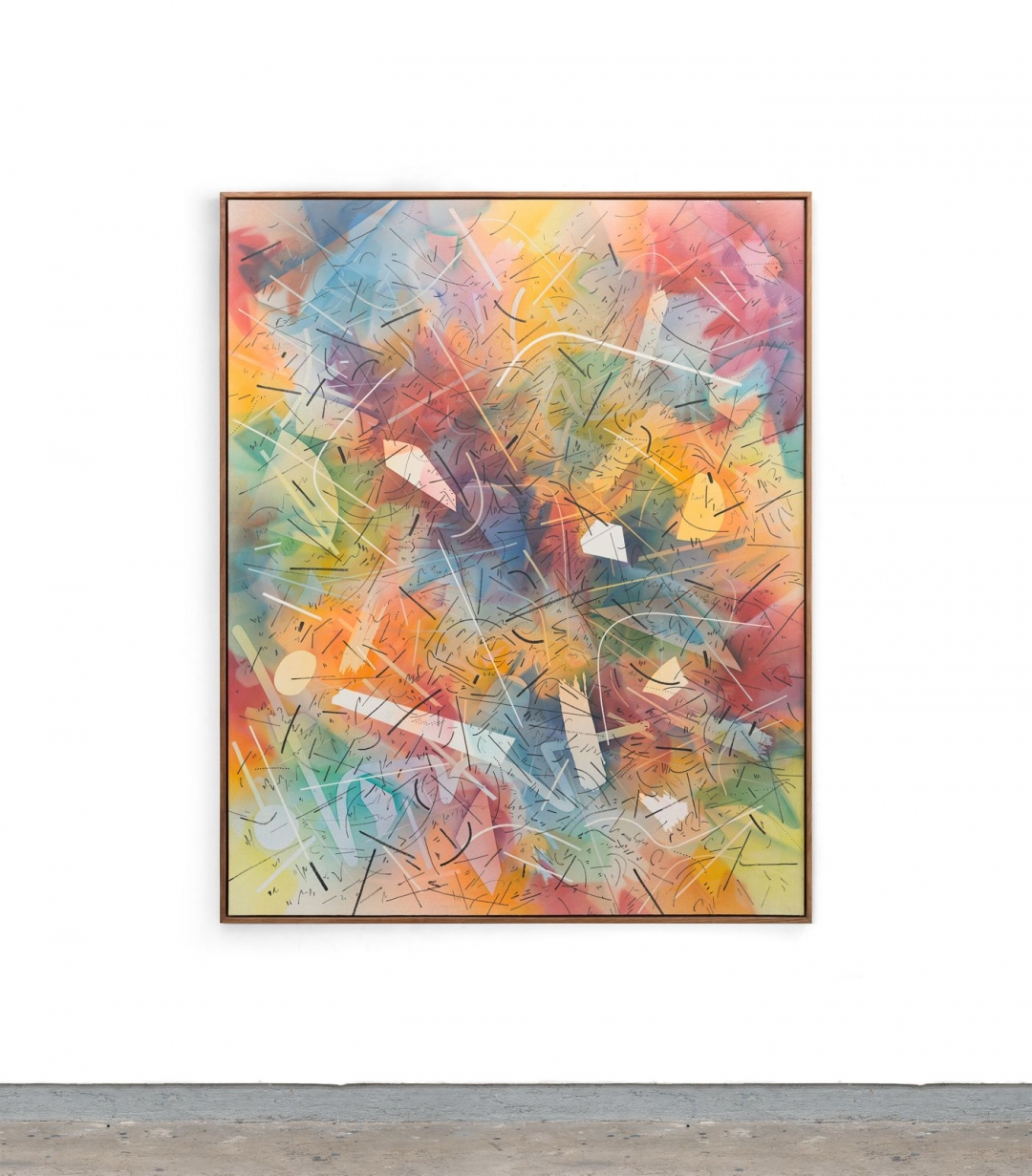
Nelle opere dell'artista il chiarore non arriva dall'esterno, già ordinato e prevedibile. Sembra piuttosto nascere nel corpo stesso del dipinto, insinuandosi tra velature, sovrapposizioni e addensamenti cromatici. A tratti emerge con decisione; altrove rimane sepolto sotto la superficie, come una brace che respira ancora. Il colore perde così ogni funzione decorativa e diventa sostanza viva: si dilata, arretra, urta ciò che gli sta accanto.
In questa ricerca risuona, pur nella distanza dei secoli, la lezione di Piero della Francesca, per il quale la luce era misura silenziosa, architettura capace di rendere il mondo stabile e quasi eterno. Rodríguez-Graham ne rovescia però la calma. Dove Piero componeva uno spazio limpido e mentale, lui lascia che il chiarore attraversi un territorio instabile, fatto di frammenti, tensioni e improvvise aperture. La luce conserva una forza costruttiva, ma non promette più ordine: mette alla prova la forma.
Diverso è il dialogo con Veronese e Tiepolo, ma altrettando evidente. Del primo sembra riemergere la sontuosità del colore, quella capacità di far vibrare le superfici attraverso accostamenti ampi e luminosi; del secondo, invece, l'impulso a sfondare lo spazio, a condurre lo sguardo oltre il limite materiale del quadro. Nei cieli di Tiepolo la luce alleggerisce i corpi e li trascina verso l'alto. In Rodríguez-Graham accade qualcosa di più inquieto: le forme affiorano, si espandono, poi rischiano di precipitare nuovamente nell'indistinto.
La sua pittura incontra anche l'energia dei futuristi, soprattutto là dove la luce smette di essere atmosfera e diventa movimento. In Umberto Boccioni la materia sembra torcersi sotto la pressione dello spazio; in Giacomo Balla i raggi luminosi si spezzano, si moltiplicano, acquistano ritmo. Rodríguez-Graham raccoglie quella medesima intuizione dinamica, senza adottarne la retorica della velocità. Il suo è un movimento più interno, quasi tellurico: l'immagine pulsa, vibra, cerca faticosamente di venire alla luce.
La figurazione rimane presente come memoria, mai come modello da riprodurre. L'artista la smonta, ne raccoglie posture, masse e tensioni, poi le ricompone in una forma sospesa tra riconoscibilità e dissoluzione. Da vicino, lo sguardo incontra una geografia inquieta di segni, impasti e interruzioni; arretrando di qualche passo, quel disordine comincia a organizzarsi e lascia intravedere un'immagine che non sembra mai essere definitiva, infatti qualcosa continua a sfuggire, come accade quando si tenta di trattenere un ricordo già corroso dal tempo.
Chiamare Rodríguez-Graham il pittore della Luce non significa dunque attribuirgli una ricerca di limpidezza rassicurante. La sua luce porta con sé la misura di Piero della Francesca, lo splendore cromatico di Veronese, lo slancio atmosferico di Tiepoli e l'energia scomposta di Boccioni e Balla; ma attraversa queste eredità senza trasformarle in citazione. Le assorbe, le incrina, le rimette in movimento.
È una luce fisica e impaziente. Scava nella materia, apre fenditure, fa emergere immagini che sembrano già sul punto di svanire. Non offre risposte e non pacifica lo sguardo. Ci conduce, piuttosto, su quel confine fragile dove la pittura nasce: tra ciò che riusciamo finalmente a vedere e ciò che, nello stesso istante, torna a nascondersi.
(Efisio Carbone, ISRE Sardegna)
Galleria Macca is proud to present The way we are, Omar Rodríguez-Graham's third solo presentation, curated by Efisio Carbone. The exhibition will be available exclusively online through our website and social media channels until the 26th November, 2026. Throughout the exhibition, a series of short reels will be released in which the artist and curator introduce the artist’s work and the monographic catalogue published by Fondazione MACC in 2025, ahead of his participation to the 1st Bienal de Yucatán (Mérida, Mexico; 26/11-28/02 2027), directed by Abraham Cruzvillegas.
The Painter of Light
Capturing light seems to be the starting point of Omar Rodríguez-Graham’s work. Not simply to portray it or use it to give shape to space, but to follow it as it meets matter and transforms it. It is an age-old, almost impossible pursuit. Light can never truly be captured; it changes even as we look at it.
In Rodríguez-Graham’s works, light doesn’t seem to come from outside, neatly arranged and predictable. Instead, it appears to emerge from within the painting itself, slipping between layers, overlapping brushstrokes and dense patches of colour. At times, it comes through strongly; at others, it remains hidden beneath the surface, like an ember that is still glowing. Colour is no longer just decorative. It becomes something alive: spreading, pulling back and pushing against the colours around it.
Although separated by centuries, this approach brings to mind Piero della Francesca, for whom light was a quiet, steady presence, giving the world a sense of order and permanence. Rodríguez-Graham, however, turns this idea on its head. Where Piero created a clear and carefully balanced space, he lets light move through a more uncertain world of fragments, tensions and sudden openings. Light still gives shape to the painting, but it no longer guarantees order. Instead, it challenges the very forms it helps to create.
The dialogue with Veronese and Tiepolo takes a different form, but it is just as clear. From Veronese, Rodríguez-Graham seems to draw on the richness of colour and the ability to bring surfaces to life through broad, luminous combinations. From Tiepolo, he takes the impulse to open up space and lead the eye beyond the physical limits of the canvas. In Tiepolo’s skies, light makes bodies feel lighter, carrying them upwards. In Rodríguez-Graham’s work, something more unsettling happens: forms emerge, spread out, then risk falling back into uncertainty.
His work also connects with the energy of the Futurists, especially where light stops being a way of creating atmosphere and becomes movement. In Umberto Boccioni’s works, matter seems to twist under the pressure of space; in Giacomo Balla’s, rays of light break apart, multiply and fall into rhythm. Rodríguez-Graham shares this sense of movement, but without the Futurists’ fascination with speed. His movement is more inward, almost geological: the image pulses and trembles, as if struggling to come into view.
Figuration remains present as a memory, never as a model to be copied. Rodríguez-Graham takes it apart, drawing on its poses, shapes and tensions before bringing them together again in a form that hovers between recognition and disappearance. Up close, we encounter an unsettled landscape of marks, layers of paint and interruptions. Step back a little, and this apparent disorder begins to fall into place, revealing an image that never seems quite complete. Something always remains out of reach, much like a memory that has slowly faded with time.
Calling Rodríguez-Graham the Painter of Light does not mean that his work seeks a reassuring sense of clarity. His light carries something of Piero della Francesca’s sense of balance, Veronese’s richness of colour, Tiepolo’s atmospheric lift, and the restless energy of Boccioni and Balla. Yet he draws on these influences without simply quoting them. He absorbs them, breaks them apart and sets them in motion again.
This is a physical, restless light. It cuts into matter, opens up cracks and brings out images that seem ready to disappear. It offers no answers and leaves the viewer unsettled. Instead, it draws us towards the fragile point where painting comes to life: somewhere between what we finally manage to see and what, in that very same moment, begins to disappear again.
(Efisio Carbone, ISRE Sardegna)